


What you will see in this article
- Before looking at flats: be clear about what you are looking for
- Choose an area without losing weeks
- Property type: which one suits you
- Step by step: what a purchase in Andorra is usually like
- Delivery times: how long a purchase actually takes
- Costs: what you pay on top of the price
- Documentation and checklist
- What constitutes a good buy in Andorra
- Typical shopping mistakes
- Costs and expenses when buying a property in Andorra
- Next steps
- Frequently asked questions
Buying a home in Andorra is not complicated, but it requires making the right decisions from the very beginning. Most problems arise when people start searching without having clearly defined their objective, their real budget or their minimum criteria.
This guide is intended for anyone who is already certain they want to buy a property in Andorra and is looking to do so securely, without overpaying or encountering any surprises after signing.
Before looking at flats: be clear about what you are looking for
Are you buying to live in, as an investment, or as a second home?
Buying to live in all year round is not the same as doing so as a wealth investment or second home. This decision dictates everything:
- Ideal zone: the centre for daily services, the mountain for switching off
- Property type: practical flat vs. house with a garden
- Acceptable level of expenditure: community fees, maintenance, supplies
- Capital growth potential: established areas vs. developing areas
Defining it from the beginning avoids wasting weeks visiting properties in Andorra that will never fit.
“Real” budget: price + expenses + margin
One of the most frequent mistakes when buying a property in Andorra is thinking only about the price of the real estate.
The correct approach includes
- Purchase price (what is shown in the advert)
- Associated costs (tax, notary, registry, administrative agency fees)
- Buffer for adjustments or contingencies
According to data from Government of Andorra, transaction costs can account for between 4% and 6% of the total value of second-hand properties, and slightly less for new-build properties. Adopting this approach makes it possible to filter out, right from the start, those properties that are genuinely viable.
Choose an area without losing weeks
Andorra la Vella, Escaldes, La Massana… how to choose according to your daily routine
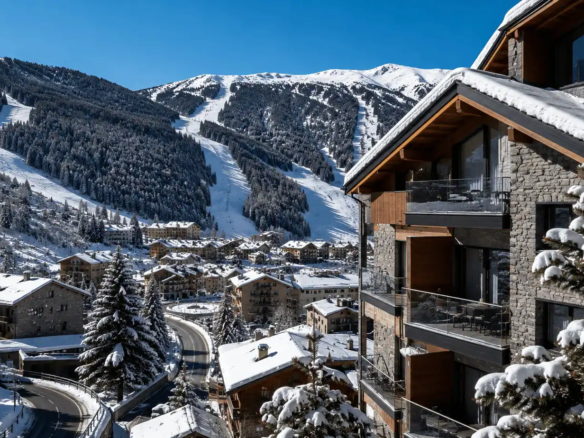
Each parish corresponds to a different lifestyle. There is no “best area”, but rather the best area for each case: urban life, services and proximity in Andorra la Vella or Escaldes-Engordany; more calm and space in La Massana or Ordino; proximity to ski slopes in Canillo or Encamp.
Explore the 7 parishes of Andorra with criteria helps to understand which area best suits each lifestyle. The article about the best area to live in Andorra delve deeper into this profile comparison.
City centre vs mountain: what you gain and what you give up
Living in the centre implies daily convenience: walking almost anywhere, having immediate services, avoiding depending on the car. The higher areas usually offer more square metres, better views and greater peace and quiet. The key is to understand what is valued most in real day-to-day life, not in the advert photo that looks like it was taken from a postcard.
Property type: which one suits you (and which one doesn't)
Flat, penthouse, duplex or detached house: practical differences
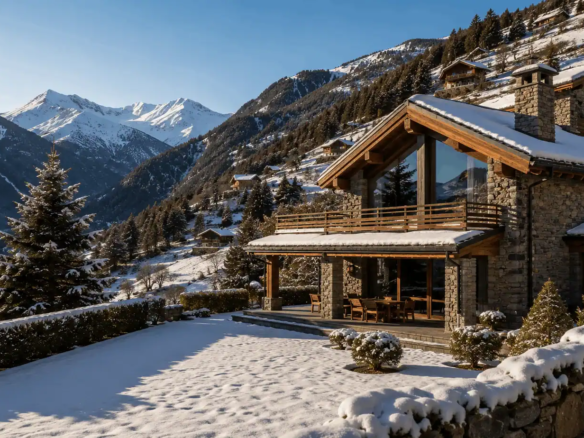
Not all property types are experienced in the same way: an apartment prioritises practicality (lower maintenance, shared costs, more central locations); a penthouse provides natural light, terraces and greater privacy, although with higher community fees; a detached house offers space, independence and its own garden, but also total maintenance responsibility. The article about types of property in Andorra compare these options in depth.
You can begin by exploring apartments and flats in Andorra, penthouses available, terraced houses o chalets for sale according to your preference.
What usually makes things more expensive (or cheaper) without showing up in photos
Aspects such as south-facing orientation (more natural light and lower heating costs), the condition of the building, the energy performance certificate or community fees do not always appear in the advertisement, but they directly impact the total cost of ownership.
Step by step: what a purchase in Andorra is usually like
Search and pre-selection
Good initial filtering avoids wasted visits. Working with a local estate agent it allows access to already validated properties that are adjusted to the budget and real objectives.
Visits: what to check no matter what
- Natural light and orientation: Does it get any sun? At what times?
- Actual condition of the property: damp, cracks, old wiring and plumbing
- Access, parking and storage room: especially in snowy mountain areas
- Environment and services: real proximity to supermarkets, schools, transport
Don't rely solely on the photos. The vast majority are taken with a wide-angle lens and edited.
Reservation and deposit
Everything agreed upon must be put in writing: final price, deadlines, inventory included, conditions. This is how most subsequent conflicts are avoided. The article on reservation and deposit in Andorra detail what this document must include in order to protect both parties.
Signing and Handover
Before signing before a notary, check the documentation, utilities already connected and the final condition of the property with a clear checklist. Once signed, there is no turning back.
Delivery times: how long a purchase actually takes
Typical timeline
In a trouble-free operation, the entire process can be completed in 6 to 10 weeks from booking to handover of keys.
What usually delays an operation
- Incomplete seller or buyer documentation
- Non-pre-approved financing: waiting for a bank response adds weeks
- Initial lack of definition: changing criteria midway through the process
Anticipating these points considerably speeds up the whole process.
Costs: what you pay on top of the price
Standard purchase and sale expenses
In addition to the price of the property, you must take into account indirect tax (ITP for second-hand properties, IGI for new-builds), notary and land registry fees, and the administrative agency’s fees. These costs vary depending on the type of property and the buyer’s profile. In Andorra, the ITP is 4% of the transfer value.
Subsequent expenditure
Once purchased, a property incurs recurring costs: service charges (if it is a flat or a terraced house), utilities (electricity, water, internet), maintenance (particularly for detached houses) and insurance (home contents and third-party liability). These costs can amount to approximately between 1% and 3% of the property’s value per year.
The “buffer” that almost nobody calculates
Setting aside an additional 5-10% from the total budget provides peace of mind and avoids unnecessary financial strain in the event of unforeseen circumstances.
Documentation and checklist
Property documents
It is essential to review
- Up-to-date Land Registry extract
- Certificate of encumbrances
- Certificate of habitability
- Energy performance certificate
- Community bylaws (if applicable)
Buyer documentation
Having financial and personal information ready significantly speeds up the process: valid ID or NIE, proof of income, and bank pre-approval if financing is involved.
Warning signs
Any documentary inconsistency, unjustified rushing by the seller, or pressure to close without reviewing warrants a pause and consultation with your adviser.
What constitutes a good buy in Andorra
Orientation, light and comfort
These factors directly influence daily quality of life and future resale value. A south-facing property with good views and no damp will always be easier to sell.
Parking space and lock-up store
In Andorra, where it snows several months a year, having covered car park It makes a huge difference in comfort. The storage room, although it may seem secondary, adds real value.
Energy efficiency and specifications
Increasingly relevant both for living (lower heating costs) and for selling in the future. According to the European Commission, energy-efficient buildings hold their value better in the medium term.
Typical shopping mistakes
Emotional or rushed decisions usually turn out expensive. Take time to compare, review and think calmly.
The total cost of ownership includes purchase, maintenance, community and utility expenses. A cheaper home can end up being more expensive if it has structural problems or high expenses.
Without clear criteria from the outset, any property “seems valid” and you end up visiting dozens of flats without making any progress.
Costs and expenses when buying a property in Andorra
Before deciding, it is essential to know all the costs involved in the purchase. Here is a rough summary:
| Concept | Indicative amount | Who pays for it |
|---|---|---|
| Stamp Duty (second-hand) | 4% of the purchase price | Buyer |
| VAT (new build) | 4.5% of the purchase price | Buyer |
| Notary public | 0.5%–1% of the price | Buyer |
| Land Registry | 0.2%–0.5% of the price | Buyer |
| Estate agent fees | 3%–5% of the price | Salesman |
| Foreign investment authorisation | ~600 € | Non-resident buyer |
Approximate costs. They may vary depending on the notary and the final price stated in the deeds.
Next steps
If you are clear about your budget, the area you are interested in and the type of property you are looking for, we can help you filter options that really fit, avoiding unnecessary viewings.
You can explore directly all properties available in Andorra, flats and apartments for sale, penthouses with terrace, terraced houses, detached chalets, commercial properties o building plots.
O contact directly for a no-obligation chat where we review your specific case together.
Continue reading
Frequently asked questions about buying property in Andorra
If buying as a Spaniard, what is worth keeping in mind?
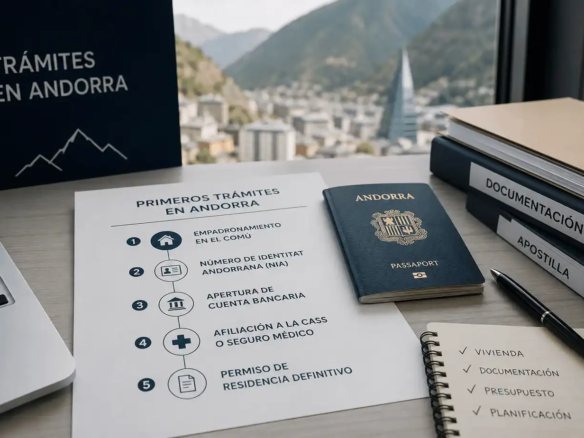
Planning the documentation properly (Andorran NIA if intending to reside) and the taxation right from the start makes the transaction considerably easier. Andorra has agreements with Spain to avoid double taxation, something worth reviewing with a tax advisor depending on each buyer's profile.
New build or resale in Andorra?
It depends on the use, the budget and the time horizon. New builds offer greater energy efficiency, guarantees and less initial maintenance. Second-hand properties provide more established locations, a negotiable price and immediate handover compared to the 12-24 months of a development.
Which areas in Andorra best fit the buyer's profile?
Families with children tend to prioritise proximity to schools (Andorra la Vella, Escaldes-Engordany). Young professionals look for the urban centre with amenities. Ski enthusiasts prefer Canillo or Encamp, due to their proximity to Grandvalira.