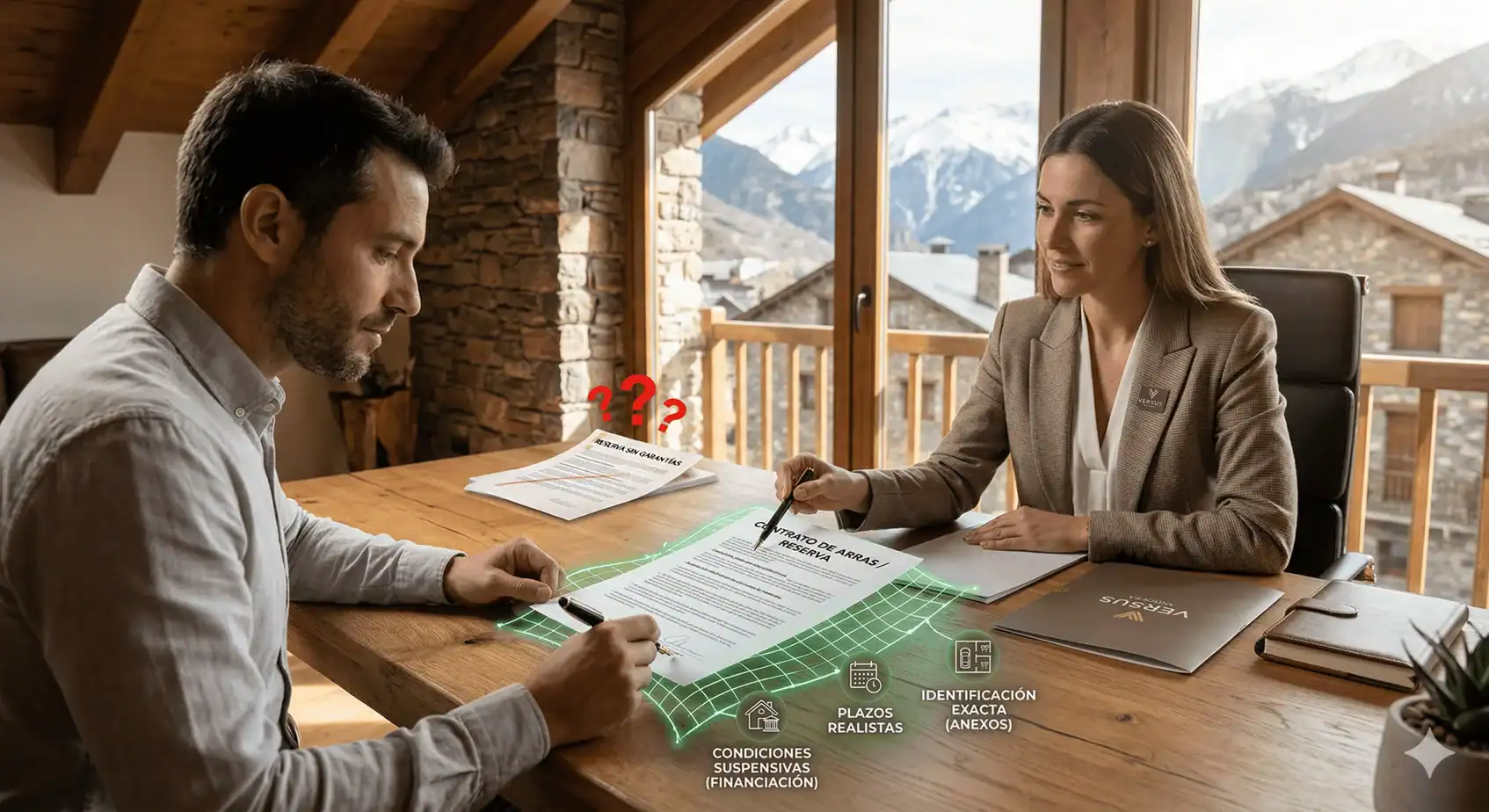
En una compraventa, la reserva o las arras son el momento en el que todo deja de ser “interés” y pasa a ser compromiso. Y por eso es el punto donde más gente se equivoca: se firma con prisa, se entrega una señal sin atar condiciones y, cuando aparece un imprevisto (financiación, documentación, plazos, permisos), el problema ya no es el piso: es el papel que se firmó.
En Andorra es habitual formalizar este compromiso con uncontrato de reserva(muy común en obra nueva) o uncontrato de arras, firmado entre partes sin necesidad de notario en esa fase inicial.
Este artículo le ayuda a identificar qué debe quedar por escrito, qué cláusulas son negociables, qué señales de alerta conviene tomar en serio y, sobre todo, qué NO firmar tal cual se lo ponen delante. Si está buscando vivienda, puede empezar revisandotodas las propiedades disponibleso filtrar por tipología comoflats and apartmentseitherattics. Si ya tiene un inmueble en mente y quiere avanzar con método, el proceso se puede conducir desde elpurchasing servicey, cuando convenga, reforzar con laproperty verification.
Primero: “reserva” y “arras” no son lo mismo (y conviene que el papel lo diga)
En la práctica, lareservasuele usarse para “bloquear” un inmueble durante un plazo corto mientras se preparan documentos o se definen condiciones (especialmente en promociones).
Lasarras, en cambio, suelen ser un acuerdo más completo: fijan precio, plazos y consecuencias si una parte se echa atrás.
Lo importante no es el nombre del documento, sino lo que contiene: hay “reservas” que funcionan como arras y “arras” redactadas como una simple señal sin protección real.
Qué firmar: el “mínimo” que protege a comprador y vendedor
Si el documento está bien planteado, debería contener como mínimo:
1) Identificación exacta del inmueble y anexos
Dirección completa, y si incluye plaza de parking, trastero u otros anexos, deben aparecer de forma expresa. Lo que no esté escrito, luego se discute.
2) Precio total y forma de pago con calendario
No basta “precio X”: conviene que quede claro cuándo se paga qué, y qué pagos se descuentan del precio final.
3) Plazos realistas, con fechas y consecuencias
Fecha límite para firmar en notaría (o para elevar a público si aplica), y qué ocurre si se retrasa por causa justificable. La ambigüedad aquí es la madre de los conflictos.
4) Condiciones suspensivas (la diferencia entre seguridad y pérdida de señal)
En vivienda, las más habituales son:
- concesión de financiación (si depende de hipoteca),
- obtención de documentación o verificación satisfactoria,
- y, en algunos casos, autorizaciones administrativas si aplica por perfil del comprador.
Cuando no hay condiciones suspensivas, cualquier “imprevisto” suele convertirse en un problema económico.
5) Qué pasa si una parte se retira (penalización, devolución, plazos)
Esto debe estar definido con claridad, sin frases abiertas del tipo “a criterio de las partes”.
Qué NO firmar tal cual (y por qué suele salir caro)
Hay tres situaciones típicas donde conviene parar:
“Señal no reembolsable” sin condiciones
Si el documento dice que la señal se pierde “pase lo que pase”, usted está asumiendo todo el riesgo. En ese caso, o se introduce una condición suspensiva, o se redefine el supuesto de devolución.
Plazos imposibles o “a confirmar”
Si no hay fechas, no hay control. Si las fechas no son realistas (por documentación, permisos o coordinación), se entra en tensión desde el primer día.
Cláusulas vagas sobre el estado del inmueble
Frases como “se compra como está” sin anexos, sin inventario (si procede) y sin opción de verificación, dejan al comprador sin herramientas si aparece algo relevante.
Aquí es donde suele encajar pedir unaproperty verificationantes de comprometer la señal, especialmente si no conoce bien el edificio, el estado real o la documentación.
La señal: cuánto tiene sentido y cómo se paga sin exponerse de más
No existe un porcentaje “oficial” único, pero en la práctica se ven señales que rondan cifras habituales en el mercado (a veces alrededor del 10%), dependiendo de si es reserva, arras, obra nueva o reventa.
Lo relevante no es el número, sino que quede claro:
- si esa señal se descuenta del precio final,
- en qué casos se devuelve,
- y qué documentación/condiciones la protegen.
Si el pago se hace sin que el documento esté cerrado, el comprador pierde capacidad de negociación inmediatamente.
Obra nueva: la reserva no es “menos seria”, es distinta
En obra nueva se usa mucho el contrato de reserva para bloquear una unidad concreta y fijar especificaciones.
En estos casos, además de lo anterior, es especialmente importante que se recoja:
- plano / memoria de calidades (o referencia inequívoca),
- fechas de entrega y penalizaciones por retraso (si se pactan),
- y cómo se gestionan cambios o modificaciones.
Si está explorando promociones, puede comparar oferta en el inventario deall propertiesy, cuando esté en fase de decisión, canalizarlo desde elpurchasing servicepara ordenar documentación y plazos.
Si el comprador no es residente: lo que conviene comprobar antes de poner fechas
En Andorra existen obligaciones específicas en materia de inversión extranjera inmobiliaria (incluyendo un impuesto regulado por ley), y eso puede afectar la planificación de la operación según el caso.
El punto práctico no es memorizar normativa: es evitar firmar arras con una fecha de notaría imposible para su situación. Para consultar legislación vigente y textos consolidados, la referencia oficial es elPortal Jurídic del Principat d’Andorra.
Un enfoque que suele funcionar: “compromiso claro, pero con red”
Si tuviera que resumir un buen contrato de reserva/arras en una frase sería esta: compromiso claro, pero con red.
Esa “red” suele tomar forma de:
- condición suspensiva de financiación (si procede),
- opción de verificación/documentación satisfactoria,
- plazos realistas,
- y consecuencias definidas si algo se tuerce.
Si el documento no permite esa red, usted está aceptando una operación a ciegas.
Señales de alerta que conviene tomar en serio
- Le piden pagar señal antes de enviar el documento completo.
- El documento no identifica bien el inmueble o los anexos (parking/trastero).
- No hay fechas, o son “aproximadas”.
- No se define qué ocurre si se rechaza financiación o aparece un problema relevante.
- Se presiona con “hay otro interesado” para que firme sin leer.
En estos casos, lo más profesional es frenar, revisar y, si procede, pasar por unaproperty verificationantes de comprometer dinero.
Siguiente paso: preparar una firma segura (sin retrasos ni sorpresas)
Para avanzar con orden, lo más útil es trabajar con tres datos: inmueble elegido, plazo objetivo y condición crítica (financiación, verificación, permisos). Con esa base, se puede estructurar una reserva/arras con sentido y coordinar el camino hacia notaría desde elpurchasing service. El punto de entrada para revisarlo en equipo es elcontact form.
⚠️Importante:En Andorra, la señal del contrato de reserva suele ser de entre 3.000 y 10.000 euros. Si el comprador desiste, pierde la señal. Si desiste el vendedor, debe devolver el doble. Revisar todas las condiciones resolutorias antes de firmar es imprescindible.
Costs and expenses when buying a home in Andorra
Before deciding, it is essential to know all the costs involved in the purchase. Here is an indicative summary:
| Concept | Indicative amount | Who pays it |
|---|---|---|
| ITP (second hand) | 4% of the purchase price | Buyer |
| IGI/VAT (new construction) | 4.5% of the purchase price | Buyer |
| Notary | 0.5%–1% of the price | Buyer |
| Property Registration | 0.2%–0.5% of the price | Buyer |
| Real estate fees | 3%–5% of the price | Seller (usually) |
| Foreign investment authorization | ~€600 | Non-resident buyer |
Frequently asked questions about buying a home in Andorra
¿Primero: “reserva” y “arras” no son lo mismo (y conviene que el papel lo diga)?
En la práctica, la reserva suele usarse para “bloquear” un inmueble durante un plazo corto mientras se preparan documentos o se definen condiciones (especialmente en promociones). Las arras , en cambio, suelen ser un acuerdo más completo: fijan precio, plazos y consecuencias si una parte se echa atrás. Lo importante no es el nombre del documento, sino lo que contiene: hay “reservas” que funcionan como arras y “arras” redactadas como una simple señal sin protección real.
¿Qué firmar: el “mínimo” que protege a comprador y vendedor?
Si el documento está bien planteado, debería contener como mínimo: 1) Identificación exacta del inmueble y anexos Dirección completa, y si incluye plaza de parking, trastero u otros anexos, deben aparecer de forma expresa. Lo que no esté escrito, luego se discute. 2) Precio total y forma de pago con calendario No basta “precio X”: conviene que quede claro cuándo se paga qué, y qué pagos se descuentan del precio final.
¿Qué NO firmar tal cual (y por qué suele salir caro)?
Hay tres situaciones típicas donde conviene parar: “Señal no reembolsable” sin condiciones Si el documento dice que la señal se pierde “pase lo que pase”, usted está asumiendo todo el riesgo. En ese caso, o se introduce una condición suspensiva, o se redefine el supuesto de devolución. Plazos imposibles o “a confirmar” Si no hay fechas, no hay control. En Andorra, este aspecto es especialmente relevante dado el carácter específico del mercado inmobiliario del Principado.
¿La señal: cuánto tiene sentido y cómo se paga sin exponerse de más?
No existe un porcentaje “oficial” único, pero en la práctica se ven señales que rondan cifras habituales en el mercado (a veces alrededor del 10%), dependiendo de si es reserva, arras, obra nueva o reventa. Lo relevante no es el número, sino que quede claro: si esa señal se descuenta del precio final, en qué casos se devuelve, y qué documentación/condiciones la protegen. Si el pago se hace sin que el documento esté cerrado, el comprador pierde capacidad de negociación inmediatamente.
Conclusion: keys to managing a home purchase well in Andorra
El mercado inmobiliario de Andorra ofrece oportunidades reales en 2026, pero requiere información actualizada y asesoramiento de confianza para tomar decisiones acertadas. Para avanzar con orden, lo más útil es trabajar con tres datos: inmueble elegido, plazo objetivo y condición crítica (financiación, verificación, permisos). Con esa base, se puede estructurar una reserva/arras con sentido y coordinar el camino hacia notaría desde el servicio de compra .
If you have questions about buying a home in Andorra, the Versus Andorra team is at your disposal to advise you without obligation. Contact us and we will help you find the best solution for your situation.
Continue reading
Last updated: 1 May 2026
Did you find this article useful?
Share it with others who might be interested