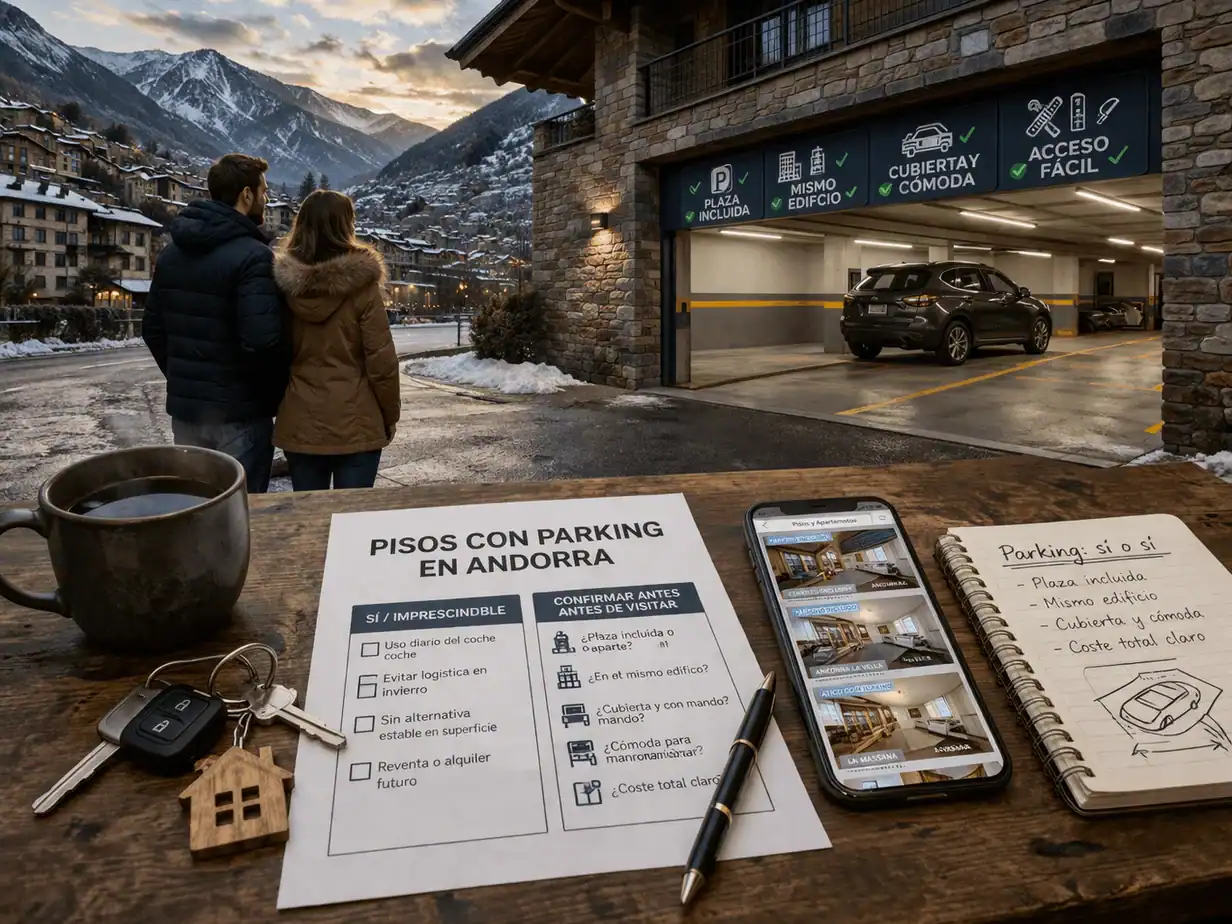
In Andorra, parking is not a decorative detail. For many people it is what makes a flat viable or not. The problem is that “with parking” in an advertisement can mean anything: space included, space apart, uncomfortable space, space far away or simply “parking in the area.”
This article helps you filter judiciously, without wasting time on visits that already have a problem. If you are in the search phase, you can start by checkingflats and apartments availableor directlyall properties. If your routine is linked to a specific parish, it is also a good idea to look at the area pages such asAndorra la VellaeitherEscaldes-Engordany, where the impact of parking is usually most evident.
¿When parking goes from “preferable” to “essential”?
There are profiles where not having a place becomes a daily friction. In these cases, parking is usually “yes or yes”:
- Use the car daily (work, children, frequent trips, large purchases).
- You want to avoid extra logistics in winter (getting home shouldn't be a negotiation with the weather).
- The area does not offer a stable alternative on the surface (due to availability or saturation).
- Consider resale or ease of future rental: parking reduces objections and increases the potential audience.
On the other hand, there are those who can live without a place: a walkable routine, an occasional car or a very clear alternative nearby. The key is that the alternative is verifiable, not a sensation.
“With parking” does not always mean the same thing
Before moving forward with an advertisement, it is advisable to translate that phrase into one of these realities:
- Place included(the clearest situation, if it is reflected in writing).
- Optional space(cost and conditions must be added; the “total cost” changes).
- Plaza in the building vs plaza at another point(very different comfort).
- Narrow or difficult to maneuver space(in practice, unusable for many cars).
- “Parking is good here”(this is not parking; it is a variable opinion).
When the advertisement does not specify it, the correct thing to do is to ask for clarification before visiting.
The “confirmation script” that should be resolved before scheduling a visit
Instead of a rigid list of “X questions,” think of this as a short script to confirm whether parking is really resolved. If you can answer the following, you will avoid most errors:
- Is the place included in the price/rent or is it paid separately?
- If it is paid separately: how much does it cost and under what conditions (duration, availability, if it is linked to the apartment)?
- Is it in the same building? If not, how far are you actually walking?
- Is it covered? Is there an automatic door and remote control?
- Does your car handle normally (not just “fit”)?
- Is there a steep ramp, sharp turn or difficult spots?
- Is there enough headroom if you use a tall car or bike rack?
- Is there comfortable access from the plaza to the portal/elevator?
- Do you have associated expenses (community/maintenance) that are worth knowing about?
- If there is no place: what is the concrete and verifiable alternative?
When these answers come clear, it makes sense to visit. When they come with doubts, the most common thing is that the parking ends up being the reason why the apartment is discarded... but after wasting time.
Purchase and rental: parking is “tied” differently
If you are buying, the place must be perfectly defined: included or not included, and under what conditions. If you are renting, the important thing is that it is stated in the contract: what space it is, how it is accessed, what is delivered (control), and what happens if there are incidents.
If you are in the rental phase, the process can be ordered from therental service. If your case is a purchase, the support is available from thepurchasing service.
Signs that usually anticipate problematic parking
There are repeated signs that should be taken seriously:
- The ad talks about parking, but when you ask it turns out to be “optional” and expensive or far away.
- They avoid specifying size, maneuver or exact location.
- The space exists, but it is only suitable for small cars or requires excessive maneuvering.
- The access has ramps or complicated turns and no one mentions it.
- It is sold as an “easy parking area” with no real alternative.
They are not automatic reasons to rule out, but they are not to move forward without seeing it and without making it clear in writing.
Mini visit checklist (3 minutes that save regrets)
When parking is important, it is worth dedicating a real minute to it during the visit:
- Perform the entry and exit maneuver (if possible, with your car).
- Assess ramps, turns, visibility and headroom.
- Measure “comfort,” not just “if it fits.”
- Check the real distance from the plaza to the portal/elevator.
- Ask about controls, maintenance and associated costs.
This small control prevents purchases or rentals that later become a daily problem.
¿Where to look when parking is a condition?
To filter by typology, it is often useful to start withflats and apartmentsor byattics, where the square appears most frequently. If your decision depends a lot on routine and area, check parishes likeAndorra la Vella,Escaldes-EngordanyeitherLa Massana, because the weight of the car and the ease of parking change a lot depending on where it is.
Next step: filter with clear data and receive consistent options
When parking is a requirement, the most efficient thing is to define three pieces of information from the beginning: budget, preferred parish/area and type of car use (daily or occasional). With that basis, you can prepare a selection in which the parking is really resolved and coordinate visits in an orderly manner. The entry point is atcontact form, and management can fit both from thepurchasing serviceas from therental service.
📌Reference:In Andorra, a parking space can have an independent value of between 30,000 and 70,000 euros depending on the parish and access. In Escaldes-Engordany and Andorra la Vella, an apartment with a space included sells up to 15% faster than one without it.
Prices by parish in Andorra 2026
To contextualize the operation, these are the current reference prices by parish:
| Parish | Average purchase price (€/m²) | Average rent/month (2 bedrooms) |
|---|---|---|
| Escaldes-Engordany | €7,400 | €1,500 |
| Andorra la Vella | €5,200 | €1,400 |
| La Massana | €4,800 | €1,200 |
| Encamp | €4,200 | €1,000 |
| Sant Julia de Lòria | €4,100 | €1,050 |
| Canillo | €3,900 | €950 |
| Ordino | €3,800 | €900 |
Frequently asked questions about buying a home in Andorra
When does parking go from “preferable” to “essential”?
There are profiles where not having a place becomes a daily friction. In these cases, parking is usually “yes or yes”: You use the car daily (work, children, frequent trips, large purchases). You want to avoid extra logistics in winter (getting home shouldn't be a negotiation with the weather). In Andorra, this aspect is especially relevant given the specific nature of the Principality's real estate market.
Doesn't “with parking” always mean the same thing?
Before moving forward with an advertisement, it is advisable to translate that phrase into one of these realities: Square included (the clearest situation, if it is reflected in writing). Optional place (cost and conditions must be added; the “total cost” changes). Square in the building vs square at another point (very different comfort). In Andorra, this aspect is especially relevant given the specific nature of the Principality's real estate market.
The “confirmation script” that should be resolved before scheduling a visit?
Instead of a rigid list of “X questions,” think of this as a short script to confirm whether parking is really resolved. If you can answer the following, you will avoid most errors: Is the place included in the price/rent or is it paid separately? If it is paid separately: how much does it cost and under what conditions (duration, availability, if it is linked to the apartment)?
Buying and renting: is parking “tied” differently?
If you are buying, the place must be perfectly defined: included or not included, and under what conditions. If you are renting, the important thing is that it is stated in the contract: what space it is, how it is accessed, what is delivered (control), and what happens if there are incidents. If you are in the rental phase, the process can be ordered from the rental service.
Conclusion: keys to managing a home purchase well in Andorra
The Andorran real estate market offers real opportunities in 2026, but requires up-to-date information and trusted advice to make the right decisions. When parking is a requirement, the most efficient thing is to define three pieces of information from the beginning: budget, preferred parish/area and type of car use (daily or occasional). With that basis, you can prepare a selection in which the parking is really resolved and coordinate visits in an orderly manner.
If you have questions about buying a home in Andorra, the Versus Andorra team is at your disposal to advise you without obligation. Contact us and we will help you find the best solution for your situation.
Continue reading
Last updated: 1 May 2026
Did you find this article useful?
Share it with others who might be interested