



What you will see in this article
- Duration, type of tenancy and property identification
- Rent, rent review and deposit
- Expenses, property condition and maintenance
- Building work, occupants, pets and subletting
- Early exit and contract termination
- Three recommendations before signing
- Essential clauses: summary table
- Next step
- Frequently asked questions
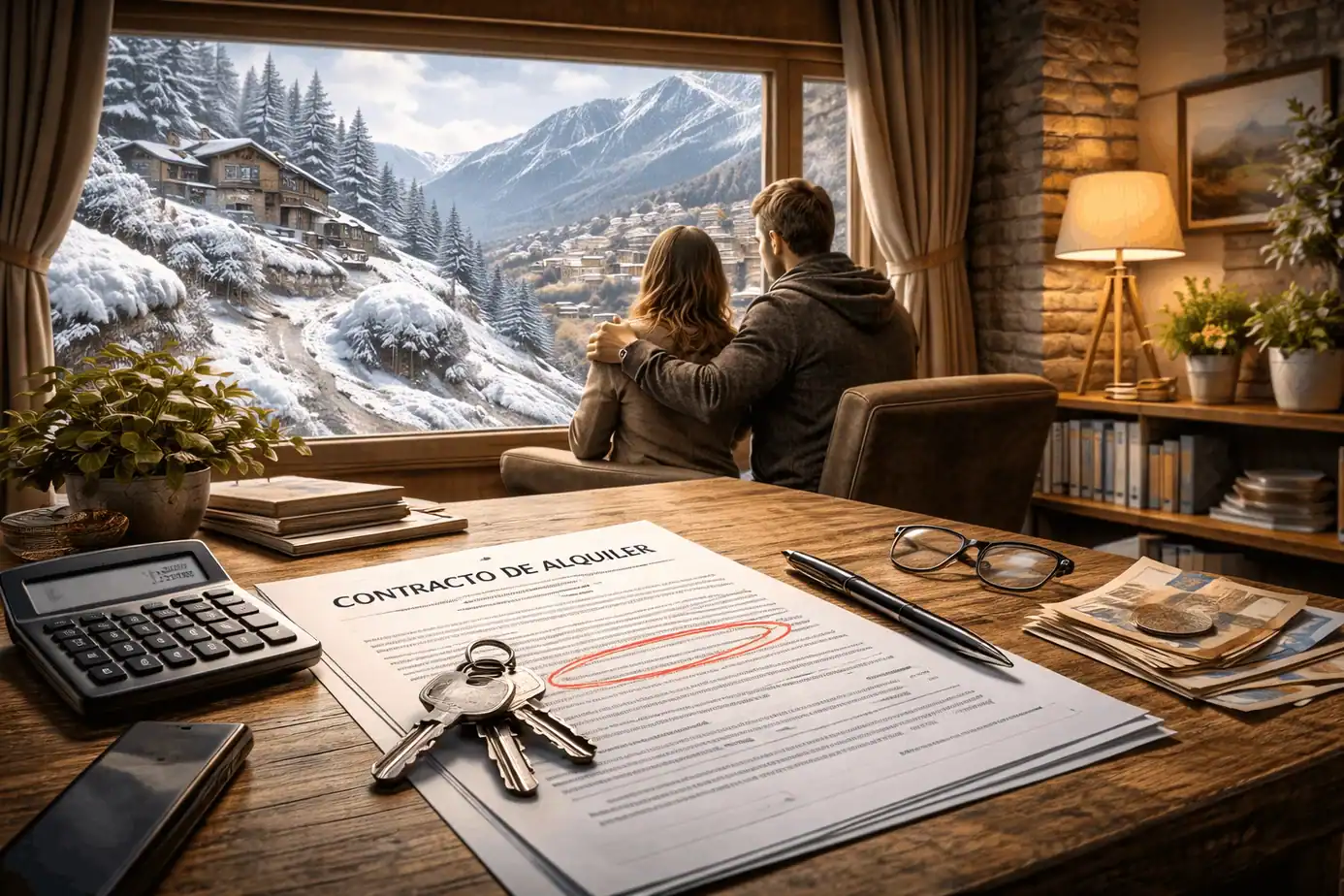
When a flat feels right, it's tempting to “wrap it up quickly”. But the tenancy agreement is what determines whether the rental will be smooth sailing or a constant source of friction. And in a high-demand market, many conditions are accepted out of habit… until the first problem arises.
This article is designed to help you review a rental contract in Andorra with discernment, even if you are not an expert. It does not replace legal advice, but it does give you a clear script: which clauses matter, what questions to ask, and what is best to put in writing before signing.
If you are looking for housing, you can view the inventory of flats and apartments available o all properties. If you already have a candidate and want to proceed with confidence, the team can assist you from the rental service.
Duration, type of tenancy and property identification
1) Contract duration and extensions
The first thing is to understand the agreed duration and how it is renewed. For a habitual residence, Andorran regulations establish a minimum duration (and, upon its termination, tacit annual extensions are provided for if neither party communicates otherwise).
What to check: initial term, how it is extended, how much notice must be given not to renew.
2) Type of tenancy: permanent vs. temporary residence
The logic changes if the rent is for a primary residence or if it is temporary. The contract must state this clearly because it affects expectations of duration, stability and conditions. For guidance, the Government of Andorra publish housing FAQs that help frame scenarios.
What to check: that the purpose of the lease is explicitly stated and consistent with your situation.
3) Full identification of the dwelling and annexes
It seems obvious, but this is where problems arise: the exact address, floor/apartment number, parking spaces, storage room, and any included annex must be listed as part of the contract. If the parking is key for you, let it be put in writing.
Rent, rent review and deposit
4) Rent amount and payment method
It must be made clear: rent, payday, method (bank transfer), and whether there are late payment penalties (and how they are calculated). If the penalty is disproportionate or confusing, ask for an adjustment.
5) Rent update (annual review)
This is a sensitive clause. Check whether there is an update, when it applies and the index or formula. If the text simply says “as prescribed by law” without further detail, ask for this to be specified or, at the very least, for the applicable framework to be indicated.
6) Deposit: how much it is, what it is for and how it is returned
The deposit must be clearly defined: amount, purpose and conditions for its return (deadline, deductions for damages, etc.). To compare it with a “model” text, you can review the residential lease agreement template published by the National Housing Institute (INH).
What to check: that the refund is not left “at the discretion” of anyone, without a procedure and without an outgoing inventory.
7) Other initial amounts: deposit, additional guarantees, first month
Sometimes concepts get mixed up. The contract must clearly separate what is a deposit and what are other amounts (if any) and under what conditions they are refunded. If it is not clear, it is a sign to put the brakes on.
Expenses, property condition and maintenance
8) Included expenses and tenant's expenses
This avoids future disputes. It must be stated what the rent includes (if anything) and which expenses the tenant pays: utilities, council tax, internet, etc. Ideally, it should be put in writing how meter readings, changes of account holder or final settlements are handled.
9) Condition of the property and inventory (if furnished)
If there is furniture or white goods, the inventory is not optional “for convenience”: it is the tool to avoid conflicts. The INH model includes annexes and a structure for the inventory.
What to check: detailed inventory, dated photographs, and delivery and return procedure.
10) Maintenance and repairs: who pays what
This clause determines how cohabitation works. Ordinary maintenance (normal use) must be distinguished from structural breakdowns or problems prior to the tenancy. If the text says “everything is paid for by the tenant”, ask for it to be limited: it is not reasonable to take on responsibility for things that do not depend on usage.
Building work, occupants, pets and subletting
11) Works and improvements: permits, timescales and final status
If you want to paint, hang things, change light fittings or make minor improvements, the contract must state what is permitted and what requires authorisation. Also check whether at the end you must return the property to its “original state” and what is considered a modification.
12) Use of the property, number of occupants and visitors
It must be clear who will live there and whether there are limits. It is usual to declare occupants. If there are strange restrictions (for example, ambiguous visitor bans), ask for clarification: ambiguity is usually an issue later on.
13) Pets
If you have a pet (or might get one), do not leave it up in the air. A “we'll see” won't do. It must be put in writing whether it is allowed, under what conditions, and if there are any specific responsibilities.
14) Sublease and assignment
Many contracts prohibit it. Check how it is worded and what happens with temporary stays by third parties. If you work seasonally or have family staying over, it is best that the text is not so rigid that it later complicates normal living.
Early exit and contract termination
15) Early departure, contract termination and handover of keys
The early termination clause is one of the most important: how much notice must be given, whether there is a penalty, how it is calculated and what happens to the deposit. Furthermore, the handover procedure must be clear: inspection, exit inventory, meter readings and return of keys.
To understand the general framework for the minimum duration of a habitual residence (and how it operates if a shorter period is agreed), the INH explains this directly in its Q&A section.
If you would like to see a well-structured contract with standard clauses (deposit, inventory, conditions), you can consult the residential tenancy agreement template of the INH. For the consolidated legal text applicable to urban leases, the Legal Portal of Andorra maintains Law 15/2022 (consolidated text) and its updated versions.
Three practical recommendations before signing
- Do not sign off with “regards”: If inventory, expense breakdown or departure conditions are missing, ask for them to be included as an annex.
- Avoid vague clauses: “according to the landlord's discretion” is an invitation to conflict.
- If you are very interested in the flat, do not sacrifice clarity for the sake of speed: Clarity accelerates, because it avoids renegotiating later.
Essential clauses of the tenancy agreement in Andorra
These are the clauses you must review carefully before signing:
| Clause | What must be specified | Risk if it is poorly worded |
|---|---|---|
| Duration and renewal | Minimum term, extension conditions | Early eviction without notice |
| Rent and review | Amount, payment date, revision index | Arbitrary increases |
| Deposit | Amount, return period | Unjustified detention |
| Bills included | Community charges, water, electricity, internet | Unforeseen hidden costs |
| Property condition | Signed inventory and photographs | Dispute over damage upon departure |
| Early resolution | Penalty and minimum notice period | Loss of deposit or compensation |
Essential clauses in a rental agreement in Andorra. Each lease may include additional conditions depending on the case.
Next step: review and rental with an orderly process
If you are about to sign and want to reduce risks, the most effective approach is to review the contract with a checklist and, if the property is furnished, ensure a clear inventory and documented condition. The team can accompany you throughout the process from the rental service, or you can initiate contact from the page of Contact.
Continue reading
Frequently asked questions about rental agreements in Andorra
What clauses must not be missing in a tenancy agreement in Andorra?
As a minimum: duration and extension conditions, rent amount and how it is updated, deposit amount and refund conditions, included expenses versus those paid by the tenant, inventory of the property's condition, and the conditions for early exit or contract termination.
Is it compulsory to do an inventory for a furnished rental in Andorra?
It is not a compulsory legal procedure in all cases, but it is highly recommended: a detailed inventory with dated photographs is the main tool to avoid disputes over damage at the end of the tenancy. The INH template includes a specific structure for this.
What happens if I want to leave the rental property before the contract ends in Andorra?
It depends on what was agreed in the early termination clause: the required notice period, whether there is a penalty and how it is calculated, and what happens to the deposit. That is why it is one of the most important clauses to review before signing, rather than when you already need to use it.